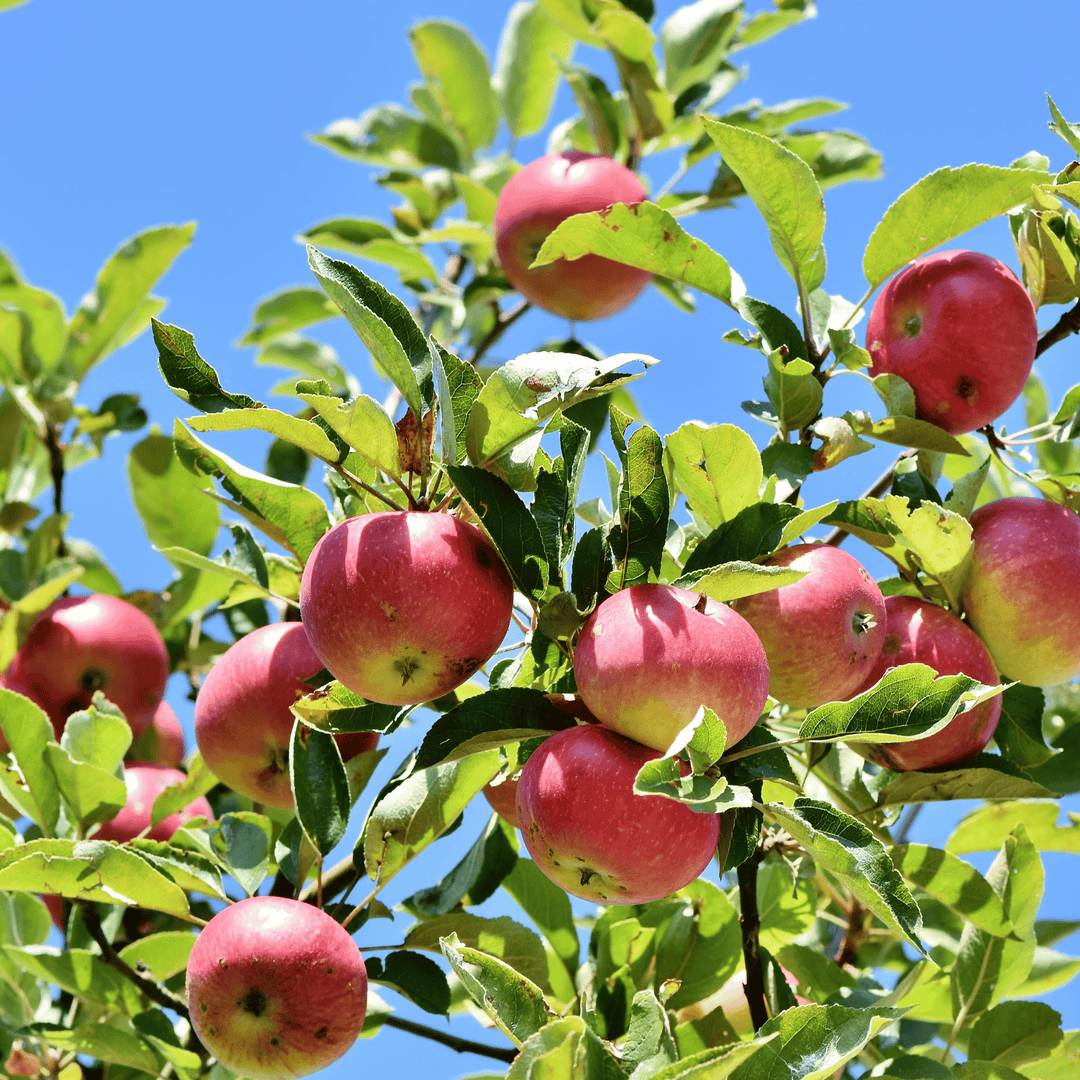



Apple, Cinnamon Spice
- In stock, ready to ship
- Backordered, shipping soon
Tree Care:
Planting:
Choose a full sun location that receives at least 6–8 hours of direct sunlight daily to maximize fruit sugar content. Dig a hole twice the width of the root ball and to the same depth.
Prefers rich, loamy, and well-draining soil with a pH of 6.0–7.0. It is not self-pollinating and requires a compatible mid-season bloom cross-pollinator nearby, such as Golden Delicious, Fuji, or Gala.
Watering:
Provide deep, regular watering 1–2 times a week for newly planted trees to establish a robust root system.
Maintain consistent soil moisture throughout the summer and early autumn. Give the tree deep soakings during the final weeks before its late-season harvest to prevent the fruit from dropping or becoming dry.
Fertilizing:
Apply a balanced, slow-release fruit tree fertilizer in early spring before new growth breaks dormancy.
Avoid heavy nitrogen applications, which can trigger overly aggressive branch growth at the expense of fruit production and dilute the unique aromatic flavor of the apples.
Pruning:
Prune annually in late winter or early spring while the tree is dormant.
Because this variety naturally produces stiff, upright shoots, focus on thinning out the center of the canopy and encouraging wider branch angles. This allows maximum sunlight penetration to ripen the fruit evenly.
Pest and Disease Control:
Exhibits good natural resistance to common apple diseases, including apple scab, fire blight, and powdery mildew.
Periodically monitor for common insect pests like codling moths or aphids, and clear away fallen leaves and debris around the base to prevent fungal overwintering.
Winter Care:
Apply a 3-inch layer of organic mulch over the root zone in late autumn to insulate against freezing temperatures, keeping it a few inches away from the trunk.
Use a plastic or wire tree guard on young trunks to prevent winter sunscald and chewing damage from hungry rabbits or voles.
Tree Description:
Appearance:
Erupts in mid-spring with a beautiful, fragrant blanket of white-to-pink flower clusters that attract early pollinators.
Followed in mid-to-late autumn by a harvest of attractive, medium-sized, round apples featuring a dark wine-red skin streaked over a yellow-green background.
Foliage:
Medium-sized, oval, forest-green leaves create a lush, healthy, and clean canopy throughout the spring and summer months.
Foliage transitions to clear shades of yellow and gold in late autumn before dropping.
Shape and Growth:
Features a naturally upright growth habit with medium-to-low vigor, displaying slight naturally dwarfing tendencies that make it easy to manage.
Typically matures at 12–16 feet tall and wide when grown on common semi-dwarf rootstocks, making it an excellent size for home gardens.
Fruit Characteristics:
Celebrated for its legendary and highly unusual flavor profile. It delivers an exceptionally sweet, crisp, and firm bite with a distinct, aromatic aftertaste of warm cinnamon—frequently described as tasting like fresh apple pie right off the tree. It is highly versatile, prized for fresh eating, baking, cider-making, and specialty preserves.
Adaptability:
Remarkably versatile and climate-tolerant. Because it has a relatively low winter chill requirement of roughly 350 chill hours, it thrives equally well in cool, coastal regions and the hot, humid summers of southern states. Hardy across USDA Zones 5–10.
Landscape Use:
A premier choice for backyard orchards, edible landscaping, and fruit collectors looking for a unique conversation piece. Its upright form fits comfortably into tighter suburban spaces, offering spectacular spring blooms and a gourmet autumn harvest.