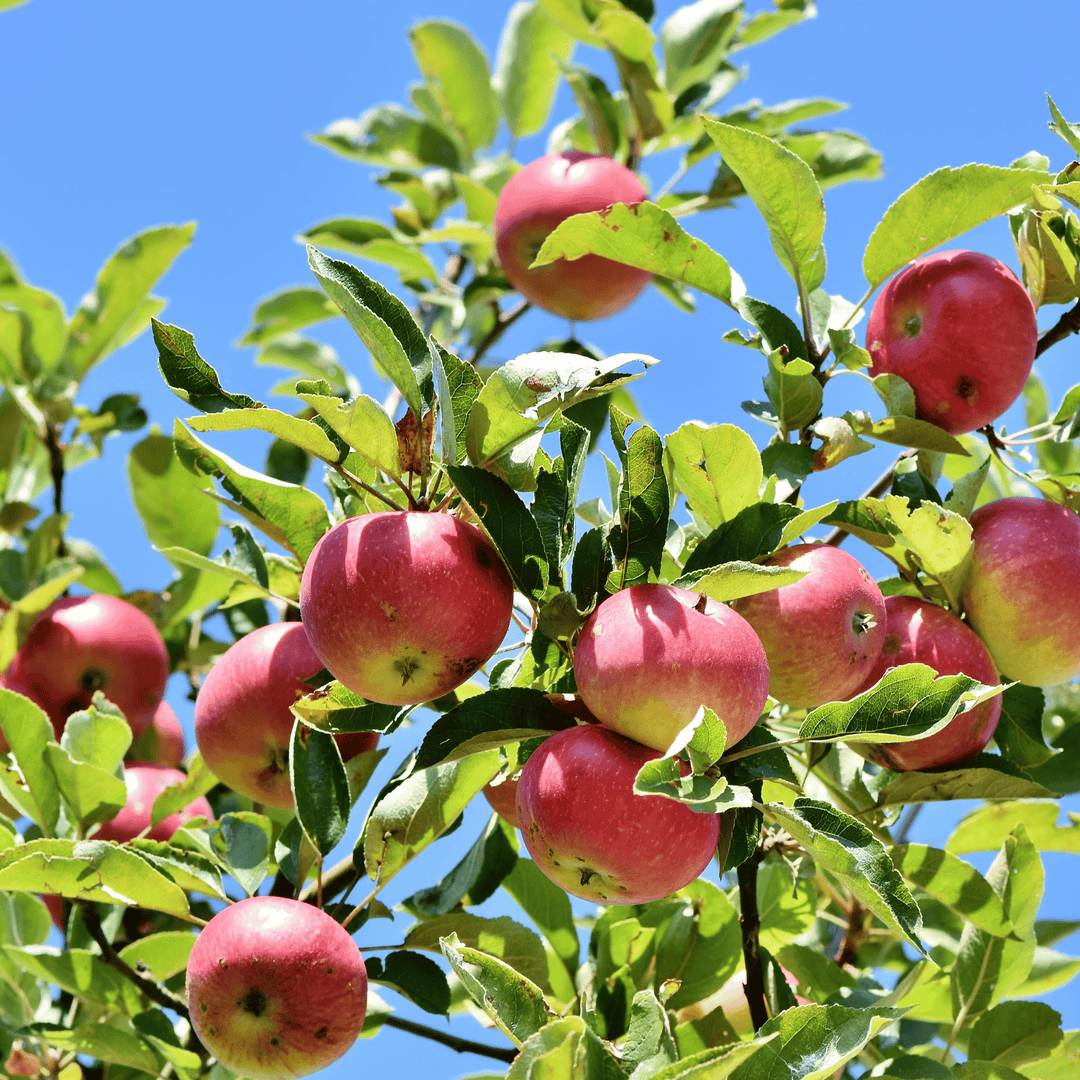



Apple, Freedom
- In stock, ready to ship
- Backordered, shipping soon
Tree Care:
Planting:
Choose a full sun location with well-draining soil. Dig a hole twice the width of the root ball and to the same depth. Ensure it is planted near a compatible cross-pollinator, such as Gala, Fuji, or a white-flowering crabapple.
Watering:
Deep water newly planted trees weekly during the first growing season. Maintain consistent soil moisture during the late summer fruit-ripening phase to ensure optimal juice and crispness.
Fertilizing:
Apply a balanced, slow-release fertilizer in early spring before new growth begins. Avoid excess nitrogen, which can lead to overly soft wood and lower the storage quality of the fruit.
Pruning:
Shape the tree in late winter using the central leader method. Thin out vertical water sprouts and ensure light reaches the inner branches to support the heavy fruit load that develops on the spurs.
Pest and Disease Control:
Famous for its exceptional four-way resistance to apple scab, powdery mildew, cedar-apple rust, and fire blight. Monitor occasionally for common insects like aphids or codling moths and treat promptly.
Winter Care:
Apply a 3-inch layer of mulch around the base for root insulation, keeping it clear of the trunk. Use a plastic tree guard on young trunks to protect against sunscald and damage from hungry winter rodents.
Tree Description:
Appearance:
Showy clusters of fragrant white flowers with soft shell-pink overtones blanket the branches in mid-spring.
Produces large, round fruits with a bright red-striped skin over a yellow-green background and clean, creamy-white flesh.
Foliage:
Pointed, forest green deciduous leaves create a full, healthy canopy all summer long.
Transitions to a clean, bright yellow in the autumn.
Shape and Growth:
Features a vigorous, upright-to-spreading habit that naturally matures into a handsome, rounded crown.
Grows at a medium rate, typically reaching 12–15 feet tall and wide on common semi-dwarf rootstocks.
Adaptability:
Celebrated as one of the most disease-resistant apple varieties available, making it highly adaptable for organic and low-spray home orchards. Extremely cold-hardy, thriving in USDA Zones 4–8.
Landscape Use:
Ideal for home orchards, backyards, and edible landscaping. Its attractive form and multi-use fruit make it a highly rewarding accent tree for fresh eating, baking, and cider making.