


Pecan, Ellis
- In stock, ready to ship
- Backordered, shipping soon
Tree Care:
Planting:
Choose a full sun location with deep, fertile, well-draining soil to accommodate its massive taproot. Dig a hole twice the width of the root ball and to the same depth. Space trees at least 40–60 feet away from structures and other trees to allow room for mature growth.
Watering:
Deep water newly planted trees weekly during the first few growing seasons. Mature pecans have exceptionally high water requirements; provide consistent irrigation during the summer nut-expansion phase and the critical nut-filling phase in August and September.
Fertilizing:
Apply a balanced fertilizer in early spring as new growth begins. Pecan trees have a vital requirement for zinc; apply zinc sulfate to the soil or as a foliar spray during spring leaf-out to prevent rosette disease and ensure healthy nut development.
Pruning:
Train young trees to a strong central leader system with wide branch angles to support heavy future nut crops. Prune in late winter while dormant to remove dead, damaged, or low-hanging branches, ensuring adequate light penetration.
Pest and Disease Control:
Notes excellent genetic resistance to pecan scab, making it significantly easier to manage than older varieties. Periodically monitor for pests like aphids, pecan weevils, or stink bugs, and keep the ground clear of fallen debris.
Winter Care:
Apply a thick layer of mulch around the base for root insulation and moisture retention, keeping it clear of the trunk. Young trees benefit from a white trunk wrap to protect the tender bark from winter sunscald.
Tree Description:
Appearance:
Produces inconspicuous male catkins and small green female flower clusters in the spring.
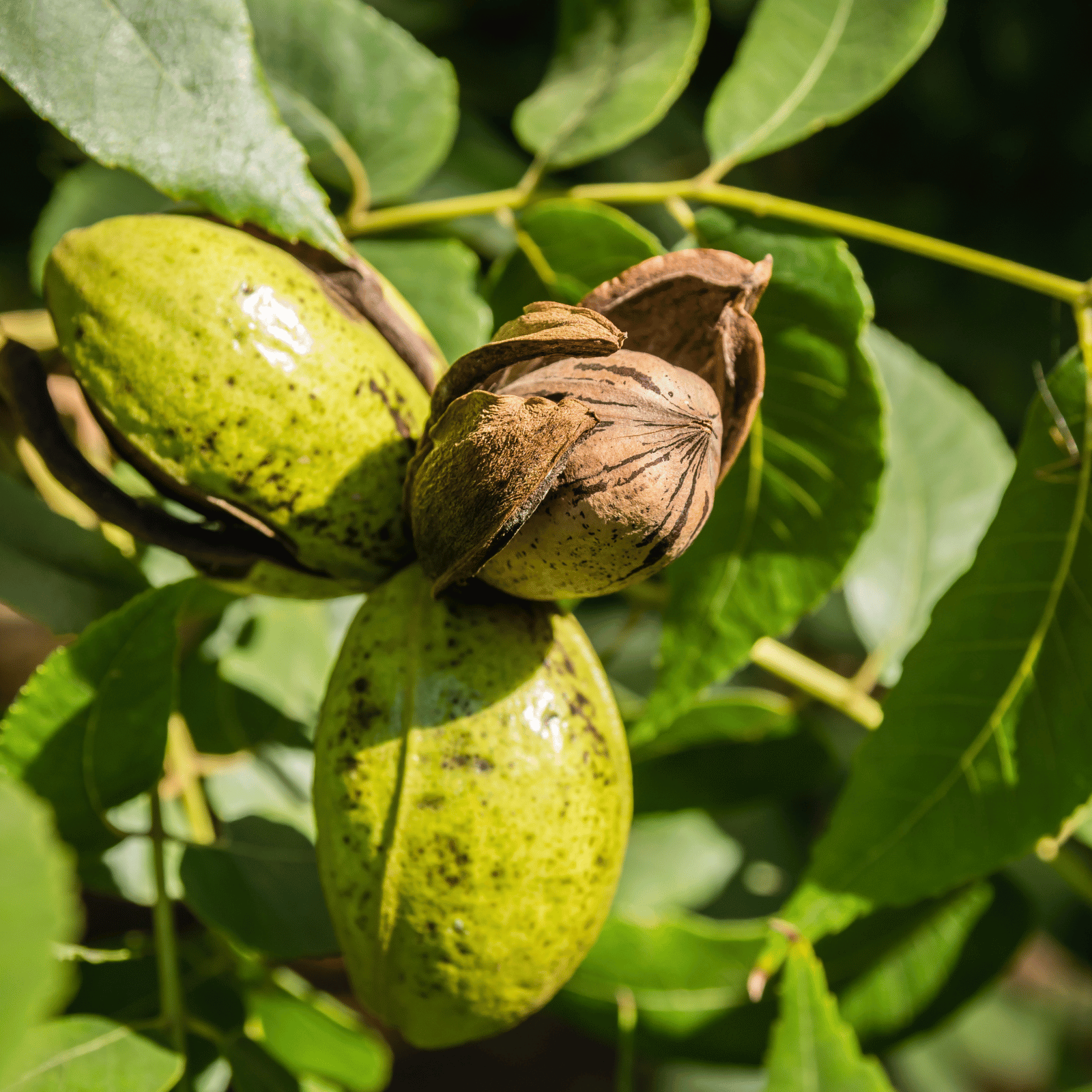
Yields large, high-quality, elliptical nuts with a clean shell and an exceptionally high kernel percentage.
A massive, majestic deciduous tree with deeply furrowed, dark gray-brown bark at maturity.
Foliage:
Large, pinnately compound leaves consisting of numerous lance-shaped, bright green leaflets that form a dense, lush canopy.
Foliage transitions to a clear, warm golden-yellow in the autumn.
Shape and Growth:
Features a statuesque, upright habit that matures into a sweeping, rounded, and spreading crown.
A large and vigorous grower, ultimately reaching 70–90 feet tall and 50–70 feet wide at maturity.
Functions as a Type II (protogynous) pecan, meaning its female flowers open before its male catkins shed pollen; it requires a Type I pollinator (such as Pawnee or Caddo) nearby to produce nuts.
Adaptability:
Exceptionally well-suited for warm, humid climates and highly favored for its outstanding performance in the southeastern United States. Thrives in rich river valleys, loams, and sandy loam soils.
Landscape Use:
Ideal for large acreage, estates, homesteads, and commercial orchards. It serves beautifully as a generational legacy shade tree while providing a highly valuable, premium nut harvest.